
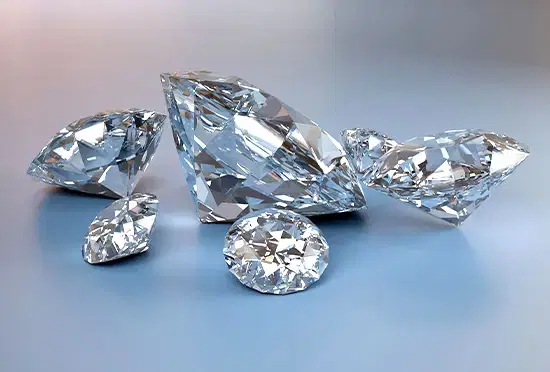
Diamonds are often regarded as the pinnacle of natural beauty and human achievement, holding both cultural and industrial significance. While they are most commonly associated with luxury and romance, diamonds are also integral to a variety of industries, pushing the boundaries of innovation and technology. From their incredible geological formation to their modern applications, diamonds offer a remarkable journey through nature, history, and science. This article explores the multifaceted allure of diamonds, their impact on industry, and the ethical considerations shaping their future.
1. How Diamonds Form: Nature’s Pressure Cooker
The creation of diamonds is a geological process that occurs under some of the most extreme conditions on Earth. Deep within the Earth’s mantle, typically between 90 and 120 miles beneath the surface, carbon atoms undergo extreme pressure and temperatures—reaching up to 2,500 degrees Fahrenheit (1,400 degrees Celsius)—to crystallize into diamond’s unique structure. This transformation takes millions, sometimes billions, of years, making diamonds some of the oldest objects on Earth.
Diamonds are then carried to the surface through volcanic eruptions that force magma upwards through kimberlite pipes, narrow conduits that contain diamonds. Once at the surface, diamonds are extracted, polished, and cut to reveal their remarkable brilliance. Each diamond is a product of immense natural forces, and the time it takes for these gems to form adds to their mystique and appeal.
2. Diamonds in History: A Symbol of Power and Eternal Love
Throughout history, diamonds have been considered symbols of wealth, power, and divine favor. The ancient Indian kings and emperors were among the first to mine diamonds, believing they were gifts from the gods. Diamonds were often used in religious ceremonies and were believed to offer protection and strength. The idea that diamonds possessed mystical properties, such as the ability to bring good fortune or healing powers, was widely accepted.
By the time diamonds reached Europe, they became coveted treasures among royalty. During the Middle Ages, they were worn by kings and queens, not only for their beauty but also for their perceived protective qualities. As diamonds became more accessible, they began to symbolize love and commitment, most notably in engagement rings. In 1947, De Beers launched its iconic "A Diamond is Forever" campaign, forever tying diamonds to the notion of everlasting love, which remains a central part of the diamond’s appeal today.
3. The Science Behind the Sparkle: Why Diamonds Shine
Diamonds’ unmatched brilliance is what sets them apart from other gemstones. Their ability to reflect light, creating the characteristic sparkle, is due to their optical properties. The shape of the diamond—the cut—is the most important factor in its brilliance. Diamonds are cut in specific proportions, and the facets are arranged in such a way that light enters the stone, reflects off the internal surfaces, and exits the diamond in an explosion of color and shine.
Diamonds also excel in clarity, as fewer internal imperfections (inclusions) allow light to pass through more efficiently, enhancing the sparkle. Additionally, diamonds with less color tend to shine more brightly. Carat weight refers to the size of the diamond, and larger diamonds naturally command higher prices due to their rarity. When combined, these four key elements—cut, color, clarity, and carat—determine the overall appearance and value of a diamond.
4. Diamonds in Industry: Beyond Beauty
Diamonds are not just prized for their beauty; their unique properties make them indispensable in a variety of industrial and scientific applications. The hardest naturally occurring material on Earth, diamonds can withstand intense pressure, making them perfect for cutting, grinding, and drilling. Industrial-grade diamonds are used in tools like saw blades, drill bits, and grinding wheels to cut through hard materials like metal, rock, and concrete.
In addition to their use in industrial applications, diamonds are also highly valued in high-tech industries. Their excellent thermal conductivity and electrical insulating properties make them ideal materials for advanced electronics. For instance, diamond-based semiconductors are being developed for use in high-performance computing, where they can dissipate heat efficiently, ensuring the smooth operation of devices under heavy workloads.
In the realm of quantum computing, diamonds are a cutting-edge material due to their unique atomic structure. Diamonds have been identified as promising candidates for quantum bits, or qubits, which could revolutionize computing power by enabling faster and more complex data processing.
5. Ethical Concerns and the Rise of Sustainable Diamonds
As with many precious resources, the diamond industry has faced ethical challenges, particularly surrounding the sourcing of diamonds. Conflict diamonds, also known as blood diamonds, are diamonds mined in war zones and sold to finance armed conflict. The humanitarian concerns surrounding these diamonds, often mined under exploitative labor conditions, have led to the implementation of the Kimberley Process in 2003. This certification system aims to prevent the trade of conflict diamond detector price s by ensuring that diamonds are sourced from conflict-free regions.
However, despite efforts like the Kimberley Process, concerns over ethical sourcing persist. The transparency of the diamond supply chain is a key issue, as it is often difficult to trace the origins of diamonds and ensure they are mined in fair, environmentally responsible ways. This has led to a growing demand for ethically sourced diamonds, with more consumers seeking to ensure that their purchases do not contribute to environmental damage or human rights violations.
An alternative to traditionally mined diamonds is the rise of lab-grown diamonds, which have gained popularity for their ethical and environmental benefits. Created in controlled laboratory environments using high-pressure, high-temperature methods, lab-grown diamonds are chemically and physically identical to natural diamonds. They offer a conflict-free, more sustainable option, reducing the environmental impact associated with traditional mining. Additionally, lab-grown diamonds are often more affordable than their natural counterparts, making them an attractive option for consumers who seek an ethical choice without sacrificing quality.
6. The Future of Diamonds: A World of Innovation and Responsibility
The future of diamonds lies in their growing role in both technological innovation and sustainability. As the world becomes more conscientious about environmental and ethical issues, the diamond industry is adapting. Lab-grown diamonds are expected to continue gaining market share, offering a solution to concerns about mining practices and environmental degradation.
On the technological front, diamonds will continue to be explored for their potential in fields such as quantum computing, medical technology, and energy storage. With their remarkable physical properties, diamonds could play a central role in the development of new technologies that revolutionize computing, healthcare, and energy systems.
Moreover, the demand for ethical diamonds is likely to continue rising. Consumers are increasingly aware of the impact their purchases have on the world, and the desire for products that are sustainably sourced and socially responsible is driving change across industries. As the diamond industry embraces these shifts, it will continue to offer beauty and brilliance while aligning with modern values.
Conclusion: Diamonds in a Changing World
Diamonds are much more than just beautiful gemstones. They are natural wonders, forged under immense pressure and heat, and have become symbols of love, power, and eternal commitment. While their role in jewelry remains central, diamonds have become vital in numerous industries, from cutting-edge technology to quantum computing.
As the diamond industry continues to evolve, it faces the challenge of balancing its storied legacy with the demands of modern consumers for sustainability and ethical practices. Lab-grown diamonds and advances in mining technology offer hope for a more responsible future, allowing diamonds to continue shining brightly—both literally and metaphorically—in the years to come.
Whether adorning a piece of jewelry or driving innovations in technology, diamonds will remain a symbol of nature’s brilliance and human ingenuity, representing the unbreakable connection between beauty, strength, and progress.