
If you need to ship car across country, one of the biggest decisions is choosing between an open transport carrier and an enclosed carrier. Both options can move a vehicle safely over long distances, but they provide different levels of protection, cost, and convenience.An enclosed carrier surrounds the vehicle with walls and a roof, protecting it from weather, road debris, dust, and many of the environmental conditions encountered during a long-distance journey.
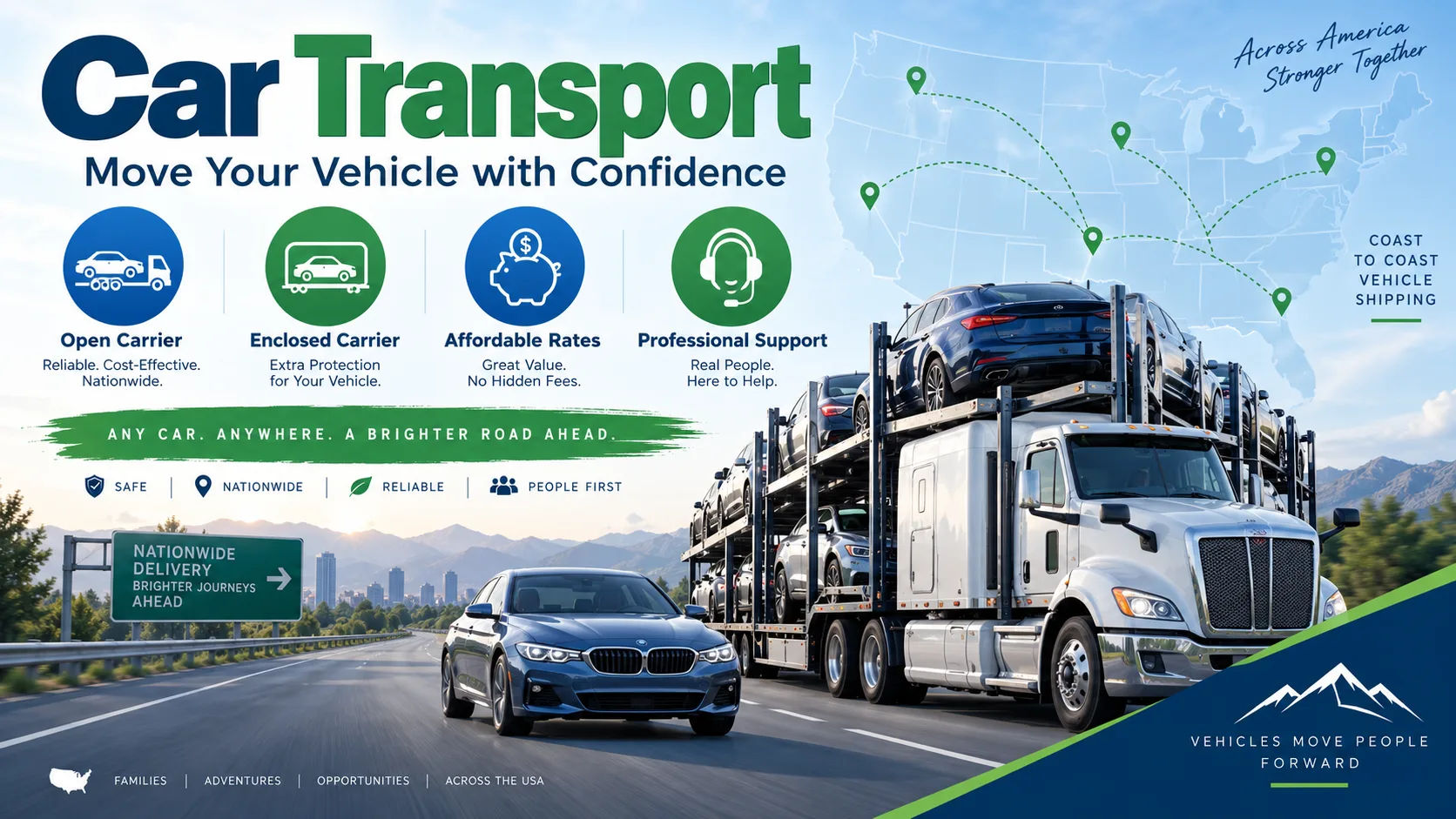
That extra protection comes at a higher price, though, so it is not automatically the best choice for every vehicle.The right decision depends on what you drive, how much the vehicle is worth, its condition, the time of year, and how comfortable you are with paying more for additional protection. Understanding these factors can make the decision much easier.
What Is an Enclosed Car Carrier?
An enclosed car carrier is a specialized transport truck designed to move vehicles inside a covered trailer. Unlike an open carrier, where vehicles are exposed to the outside environment, enclosed transportation keeps the vehicle inside a protected space during transit.
Enclosed trailers are often used for high-value, luxury, classic, exotic, antique, collectible, and specialty vehicles. They can also be useful when owners want additional protection for a newer vehicle.
The trailer typically protects against rain, snow, dirt, dust, wind, and airborne road debris. Depending on the carrier and equipment, additional precautions may also be used when loading and securing the vehicle.
If you plan to ship car across country, enclosed transportation is essentially the premium option for minimizing exposure during the journey.
Enclosed vs. Open Car Shipping
The most common alternative to an enclosed carrier is open auto transport.
Open carriers are the trucks commonly seen carrying several vehicles on two levels. Because the trailer is open on the sides and top, the vehicles are exposed to normal outdoor conditions.
That does not mean open transport is unsafe. It is a standard method used to move thousands of vehicles across the country. In fact, for many ordinary daily-driver vehicles, open transport offers an excellent balance between price and protection.
Enclosed transport provides a higher level of environmental protection but usually costs more because enclosed trailers carry fewer vehicles and require specialized equipment.
When deciding how to ship car across country, the question is not simply whether one method is safe and the other is unsafe. It is about determining how much additional protection your particular vehicle needs.
When Should You Choose an Enclosed Carrier?
You Own a Classic or Collectible Vehicle
Classic cars often deserve special consideration.
An older vehicle may have original paint, delicate trim, custom components, or restored surfaces that you want to keep in excellent condition. Even minor exposure to weather and road debris may be undesirable when the goal is preservation.
For a collectible vehicle, paying more for enclosed transportation can make sense because protecting the vehicle may be more important than saving several hundred dollars on transportation.
If you are planning to ship car across country for a car show, auction, collection transfer, or restoration project, enclosed transport is particularly worth considering.
You Own a Luxury or Exotic Car
Luxury and exotic vehicles can have expensive paint finishes, low ground clearance, specialized wheels, and sensitive bodywork.
Owners of these vehicles often prioritize protection over the lowest possible shipping price.
An enclosed carrier can reduce exposure to rocks, dust, rain, and other road conditions. Some enclosed transport companies also use equipment and procedures designed for vehicles that require extra care.
The value of the car should be considered alongside the transportation cost. Spending more to protect a high-value vehicle may be reasonable when even a small cosmetic issue could be expensive to repair.
Your Vehicle Has a Custom Paint Job
A custom paint job can make a vehicle more vulnerable to concerns that would not matter as much with a standard factory finish.
If you have invested heavily in a custom color, metallic finish, matte finish, graphics, or other paintwork, keeping the vehicle covered during a long trip may provide peace of mind.
This is one situation where enclosed transport can be a practical choice rather than simply a luxury.
You Are Moving During Severe Weather
Weather is another important consideration.
If you need to ship car across country during winter storms, periods of heavy rain, or other challenging weather conditions, enclosed transportation can reduce the vehicle's exposure.
The carrier cannot control every condition on the road, and enclosed shipping does not make a vehicle completely immune to transportation risks. However, the roof and enclosed sides provide a significant barrier against normal weather exposure.
For a vehicle that you want to arrive clean and protected, that difference can matter.
When Is Open Transport the Better Choice?
Enclosed transportation is not necessary for every vehicle.
If you have a normal daily driver with an ordinary factory finish, open transport may be perfectly suitable.
Open carriers are widely used because they are efficient and generally less expensive. They can also transport more vehicles on a single trip, which helps keep costs lower.
If your main goal is simply to get the vehicle from one state to another safely while keeping transportation costs reasonable, open shipping may be the better financial decision.
Before deciding how to ship car across country, consider the actual condition and value of the vehicle rather than assuming the most expensive service is automatically the best.
How Much More Does Enclosed Shipping Cost?
The price of enclosed transportation varies considerably.
Distance, vehicle size, vehicle type, pickup location, delivery location, season, fuel costs, carrier availability, and transport timing can all influence the final quote.
Enclosed transportation generally costs more than open transportation because enclosed carriers have higher operating costs and usually carry fewer vehicles.
A quote should therefore be evaluated in context.
For example, paying extra to transport an ordinary older sedan may not provide enough practical benefit to justify the additional expense. On the other hand, spending more to protect a rare collector vehicle worth many times the transportation fee may be a sensible decision.
When comparing prices to ship car across country, do not look only at the headline number. Find out exactly what services and protections are included.
What Protection Does an Enclosed Carrier Provide?
The primary advantage is environmental protection.
The vehicle is shielded from rain, snow, direct sunlight, road spray, dust, and much of the debris that can be encountered during highway travel.
This is particularly useful for vehicles with delicate finishes or those that are difficult or expensive to repair.
However, it is important to maintain realistic expectations.
Enclosed transport does not eliminate every possible transportation risk. Vehicles still need to be loaded, secured, unloaded, and moved around during the process. Mechanical problems, loading incidents, delays, and other issues can still occur.
The goal is risk reduction, not absolute risk elimination.
What Should You Check Before Booking?
Verify the Carrier's Insurance
Insurance should be one of your first questions.
Ask the transportation company about its cargo insurance and request information about coverage limits and exclusions. You should understand what happens if the vehicle is damaged during transportation.
Do not assume that every possible situation is automatically covered.
If you plan to ship car across country, having a clear understanding of insurance before handing over the keys is much better than trying to understand coverage after a problem occurs.
Inspect the Vehicle Before Pickup
Document the vehicle's condition before loading.
Take photographs of the exterior from multiple angles. Photograph existing scratches, dents, chips, wheels, glass, and other noticeable imperfections.
It is also useful to take clear photographs of the interior and odometer.
The carrier will normally complete a condition report, but your own photographs provide an additional record of the vehicle's condition.
Ask About Loading Equipment
Not every vehicle can be handled the same way.
Low-clearance sports cars, modified vehicles, and some luxury cars may require special loading procedures.
Ask whether the carrier has equipment appropriate for your vehicle.
A reputable transporter should be willing to discuss how the vehicle will be loaded and secured instead of giving vague answers.
How Should You Prepare Your Vehicle?
Preparing the vehicle properly can make transportation easier.
Remove personal belongings from the cabin and trunk. Items left inside can move around during transportation and may cause damage.
Remove or secure loose exterior accessories where appropriate. Fold in mirrors if the carrier recommends doing so, and make sure the alarm system will not create problems during transit.
Keep the fuel level relatively low while maintaining enough fuel for loading and unloading procedures. The exact requirement can vary by carrier.
You should also check the tire condition and make sure the vehicle is operational unless you have specifically arranged transportation for an inoperable vehicle.
When you ship car across country, preparation is part of the process rather than an afterthought.
Is Enclosed Transport Worth It for a New Car?
A new car can be a reasonable candidate for enclosed shipping, particularly if maintaining its condition is extremely important to you.
A brand-new vehicle has not yet accumulated normal road wear, so some owners prefer to minimize exposure during its first long-distance journey.
However, this is ultimately a value decision.
If the additional cost is comfortable within your budget, enclosed transportation provides extra environmental protection. If the added cost is significant, open transport may still be a practical option.
There is no universal rule saying every new vehicle requires enclosed shipping.
Does Enclosed Shipping Guarantee No Damage?
No.
This is an important distinction.
Enclosed transportation significantly reduces exposure to outside conditions, but it does not guarantee that a vehicle will arrive without any possible damage.
Transportation involves handling equipment, loading ramps, straps, chains, and other procedures. Mechanical or operational issues can also occur.
That is why choosing a reputable transporter, understanding the insurance coverage, documenting the vehicle, and reviewing the condition report are all important.
The enclosed trailer is one part of the protection strategy, not the entire strategy.
How Far in Advance Should You Book?
Long-distance vehicle transportation should generally be planned ahead when possible.
Last-minute arrangements may leave you with fewer carrier options and less flexibility concerning pickup dates.
Demand can also change during different seasons. Moving periods, holidays, weather conditions, and major events can affect availability and pricing.
If you already know when you need to ship car across country, requesting quotes early gives you more time to compare companies, services, insurance information, and pickup windows.
Avoid choosing a company solely because it promises an unusually low price.
A surprisingly cheap quote can sometimes involve different service expectations, additional fees, or a less convenient pickup arrangement.
Questions to Ask the Transport Company
Before booking, ask practical questions rather than simply asking for the cheapest price.
Find out whether the shipment will remain inside the enclosed trailer throughout transportation. Ask about pickup and delivery estimates, insurance coverage, cancellation policies, additional fees, vehicle preparation requirements, and procedures for inoperable vehicles.
You should also ask how the vehicle will be secured and whether the carrier has experience with your type of vehicle.
Good communication before pickup can prevent misunderstandings later.
Is Enclosed Shipping Better for Long-Distance Moves?
The longer the distance, the more exposure a vehicle would normally experience to road conditions.
For that reason, enclosed shipping can become more attractive when the vehicle is traveling several hundred or several thousand miles.
Still, distance alone should not determine your choice.
A standard sedan traveling across the country may be completely appropriate for open transport. A valuable classic traveling the same distance may justify enclosed transportation.
The vehicle's value and sensitivity should remain central to the decision.
What About Delivery Timing?
Enclosed transportation does not necessarily mean faster transportation.
The primary benefit is protection, not speed.
Pickup and delivery schedules can be affected by traffic, weather, carrier routes, loading requirements, and other logistical factors. A company may provide an estimated delivery window rather than an exact arrival time.
If you have an important deadline, such as a vehicle event or move-in date, discuss timing before booking.
Understanding the difference between an estimated delivery date and a guaranteed delivery arrangement can prevent unrealistic expectations.
How to Decide Between Open and Enclosed Transport
Think about the vehicle first.
If it is an ordinary daily driver, open transportation may provide everything you realistically need.
If it is a classic, exotic, luxury, collectible, heavily customized, or exceptionally valuable vehicle, enclosed transportation becomes much easier to justify.
Your budget also matters.
The best shipping method is not necessarily the one with the most protection. It is the one that provides an appropriate level of protection without creating unnecessary expense.
When you ship car across country, consider the vehicle's value, condition, weather, distance, budget, and your tolerance for cosmetic exposure.
Conclusion
So, should you ship car across country in an enclosed carrier?
For most ordinary vehicles, enclosed transport is optional rather than essential. Open transportation is a common and practical solution that can move a daily driver across long distances at a lower cost.
However, enclosed transportation becomes much more attractive when the vehicle is valuable, rare, restored, customized, or particularly important to you. It provides protection from weather and road debris and can give owners greater confidence during a long-distance journey.
The smartest approach is to compare the additional cost with the potential value of protecting your vehicle. If spending more fits your budget and the vehicle would be expensive or difficult to repair, enclosed shipping can be a worthwhile investment.
Before booking, research the transporter carefully, verify insurance, document your vehicle's condition, understand the pickup and delivery terms, and ask how your specific vehicle will be handled.
Ultimately, the question is not whether enclosed transport is always better. It is whether the extra protection makes sense for your particular vehicle. For a valuable or delicate car, the answer may be yes. For a normal daily driver, the lower cost and practicality of open transport may make more sense.